
In our last post, we introduced Nature’s Smile and why we believe cleaning should work with biology, not against it. Today we’re going a level deeper – into the bio-enzyme range itself, and why it behaves so differently from the products most people grew up using.
The Problem With “Clean”
Most cleaning products are built around a simple idea: kill everything, dissolve everything, strip everything away. It works in the short term. But it comes with a cost – harsh chemicals that irritate skin and airways, that build resistance in the organisms they’re meant to control, and that don’t stop being active once they go down the drain. They keep reacting long after the surface looks clean.
The health cost is real, even when it’s invisible. Airborne compounds released from harsh cleaning and laundry products are linked to respiratory irritation – coughing, throat irritation, and aggravated asthma or allergies – often from chemicals that have no detectable smell at all. Repeated skin contact with harsh surfactants and solvents is associated with dermatological issues like contact dermatitis, dryness, and sensitisation over time. There is also growing concern around certain chemical classes and their neurological effects with long-term, cumulative exposure.
It’s not adults carrying the heaviest load, either. Children, babies, and pets are exposed constantly and often unknowingly – through laundry chemical residue sitting against their skin in the clothes they wear all day, and through breathing in cleaning product residues around the home, many of which are entirely odourless. Their smaller bodies, developing systems, and closer proximity to floors and surfaces make that daily, invisible exposure even more significant.
Bio-enzyme products start from a different question: instead of forcing a result, how do we accelerate a process that’s already happening naturally?
How Bio-Enzyme Actually Works
Enzymes are biological catalysts – they speed up the breakdown of organic material like grease, starch, protein, and biofilm into simpler compounds that rinse away cleanly. Rather than fighting the mess with harsh agents, our formulations introduce targeted enzyme and beneficial-microbe activity that:
- Breaks down organic buildup at a molecular level – grease, grime, and biofilm are consumed, not just masked or pushed aside.
- Keeps working after you walk away. Enzymatic action continues acting on residue in traps, drains, and hard-to-reach areas, not just the surface you wiped.
- Is gentle on people and surfaces – no harsh fumes, no residue that needs a second product to remove.
- Breaks down safely once it leaves your home or site – because it’s biological to begin with, it doesn’t add a new chemical load to the water system downstream.
Why It’s Different From “Eco-Friendly” Marketing
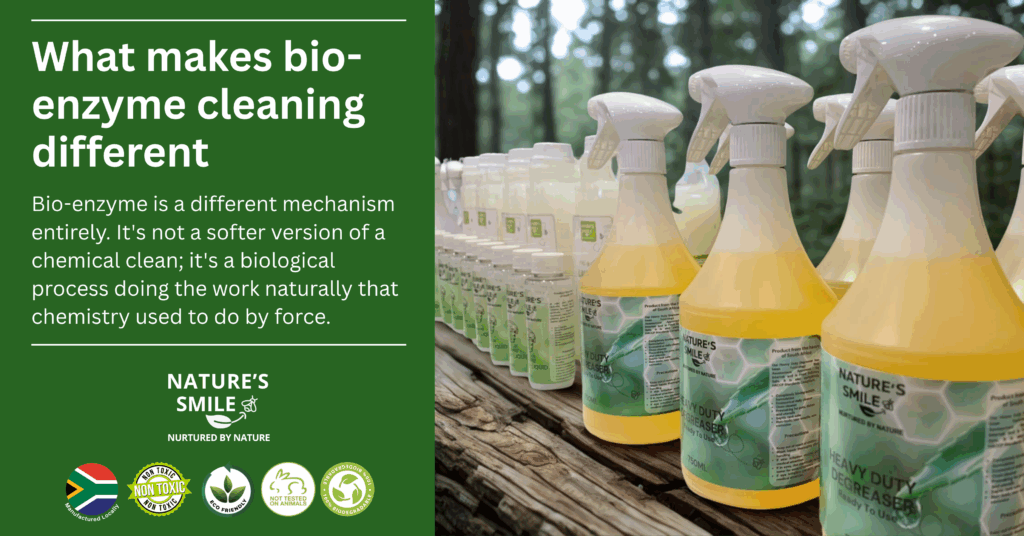
A lot of “green” cleaning products simply swap out one synthetic ingredient for a slightly less harsh one – the mechanism of cleaning stays the same. Bio-enzyme is a different mechanism entirely. It’s not a softer version of a chemical clean; it’s a biological process doing the work that chemistry used to do by force. That’s the difference between masking a problem and actually resolving it.
This is also why the same range works across such different use cases – from an everyday household surface spray to a commercial fat trap under heavy daily load. The organic material an enzyme breaks down doesn’t change; only the scale does.
What This Means for You
If you’ve tried “natural” cleaning products before and found they didn’t quite perform, that’s usually because they were formulated to be milder, not to work differently. Bio-enzyme isn’t about accepting a weaker clean in exchange for being safer – it’s about getting a genuinely different kind of effective.
Next in the series: a closer look at how this plays out in practice, with our fat trap and wastewater treatment service – and why it’s becoming the smarter compliance choice for restaurants and food service operators.

