
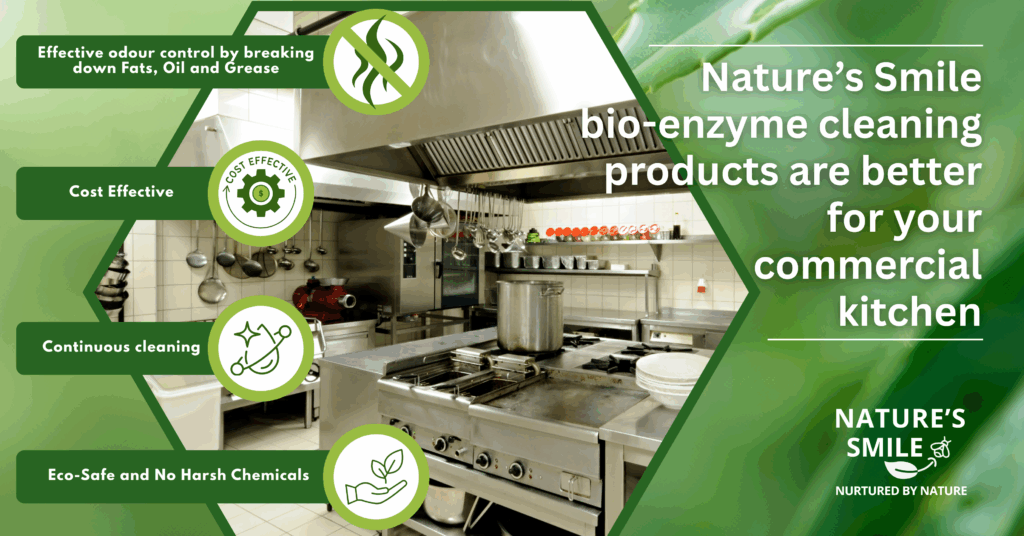
In our last two posts, we introduced Nature’s Smile and unpacked what makes our bio-enzyme range different at a molecular level. Now let’s bring that down to where it matters most for operators: the commercial kitchen – and specifically, the fat traps, grease traps, and drains that quietly determine whether a kitchen stays compliant or ends up with a costly problem.
The Reality of Grease in a Commercial Kitchen
Every commercial kitchen produces fats, oils, and grease (FOG) as a byproduct of daily cooking. That FOG has to go somewhere, and traditionally it’s managed with a combination of manual pumping, harsh chemical drain treatments, and reactive callouts once a blockage has already happened. It’s an approach that treats the symptom – the blockage – rather than the underlying buildup that caused it.
Why Traditional Methods Fall Short
- Chemical treatments often just relocate the problem. Harsh degreasers can break FOG into smaller particles without truly breaking it down, meaning it re-solidifies further along the pipe network instead of in the trap itself.
- Manual pump-outs are reactive, not preventative. By the time a trap needs emptying, buildup has often already narrowed pipework or started producing odours.
- Non-compliance carries real costs. Municipal bylaws typically require FOG levels below a set threshold before wastewater leaves the premises. Blockages, overflows, and failed inspections can mean fines, remedial work, and reputational damage with environmental health inspectors.
How Bio-Enzyme Changes the Equation
Bio-enzyme treatment introduces enzymes and beneficial bacteria that actually consume organic material – fats, oils, greases, starches, and proteins – converting them into water, CO₂, and simpler compounds that safely pass through the system. The practical difference for a kitchen operator:
- Continuous breakdown, not just periodic removal. The biological process keeps working between service visits, reducing the buildup that causes blockages in the first place.
- Fewer emergency callouts. Because buildup is being broken down continuously rather than accumulating until the next pump-out, the risk of a surprise blockage drops significantly.
- Better odour control. Odour is largely a byproduct of decomposing organic matter – breaking it down at the source addresses the smell rather than masking it.
- Supports compliance rather than working against it. Consistently lower FOG levels make it easier to stay within municipal discharge limits, rather than scrambling to fix a problem after an inspection flags it.
- A safer environment for kitchen staff. Less reliance on harsh chemical drain treatments means less exposure to fumes and irritants in a space where people are working daily, often in close quarters.
What This Looks Like in Practice
For a commercial kitchen, this typically means moving from a reactive model – call someone when there’s a problem to a scheduled service model where bio-enzyme dosing is applied on a regular cycle, with buildup monitored and managed before it becomes an issue. It’s a shift from firefighting to prevention, and it tends to cost less over a year than the combination of emergency callouts, compliance penalties, and lost operating time that reactive management brings.

