
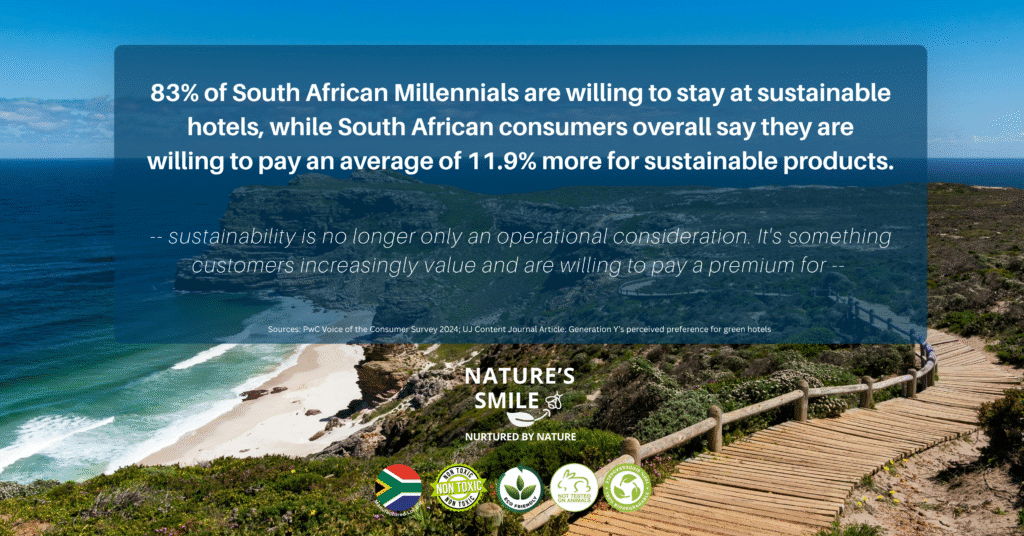
For hotels, guesthouses, and restaurants, cleaning has traditionally been an invisible cost centre – something guests only notice when it goes wrong. That’s changing. Sustainability has moved from a “nice to have” into a genuine differentiator in hospitality, and the products used behind the scenes are increasingly part of that story.
Guests are asking the question, even when they don’t say it out loud
Today’s travellers – particularly the growing segment of eco-conscious and younger guests – are making booking decisions based on a property’s environmental credentials. Certifications, green initiatives, and visible sustainability commitments increasingly influence where people choose to stay and eat. But few guests think about what’s actually being used to clean the room they’re sleeping in, the kitchen preparing their food, or the pool they’re swimming in. That’s precisely where the opportunity lies: it’s an area of genuine environmental impact that’s almost entirely unseen – and hospitality brands that get ahead of it can turn an invisible cost centre into a visible point of difference.
The hidden environmental cost of conventional cleaning
Traditional cleaning chemicals are mostly synthetic, and many carry real environmental costs: they’re harsh on waterways, slow to biodegrade, and often require careful handling and disposal. In a hospitality setting – where cleaning happens constantly, at scale, across kitchens, rooms, laundries, and public areas – the cumulative footprint is significant. Switching to bio-based, biodegradable alternatives doesn’t just reduce chemical exposure for staff and guests; it measurably reduces what a property sends down the drain and into the environment every single day.
Sustainability and compliance aren’t separate conversations
For hospitality brands, sustainability can’t come at the cost of hygiene performance – food safety and guest safety are non-negotiable. This is where the bio-enzyme and bio-based lactic acid approach earns its place: it’s possible to get certified, auditable disinfection performance (bactericidal, fungicidal, sporicidal) from biological, plant-derived active ingredients, rather than assuming “green” automatically means “weaker.” Independent testing and certification – SANS standards, SANAS laboratory testing, ISO 9001 manufacturing – mean hospitality brands don’t have to trade compliance for conscience.
A story worth telling
Sustainability claims only carry weight when they’re backed by something real. A hospitality brand that can point to independently certified, biodegradable cleaning products – used consistently across housekeeping, F&B, and back-of-house – has a genuine, defensible story to tell guests, auditors, and sustainability-focused booking platforms alike. It’s a small operational shift with an outsized reputational return.
Why it matters
The hospitality industry runs on trust – guests trusting a property to be clean, safe, and responsible. Eco-friendly cleaning isn’t just about the environment; it’s about giving hospitality brands one more way to prove that trust is well placed, quietly, in a part of the operation guests never see but every property depends on.

